Less than seven ago, I wrote an article titled as Somali-land foreign minister characterizes Undiplomatic tone, which possible may damage our brotherly relationship with friendly Arab-GCC member country (UAE). My predication become in reality less than a week, as it become apparent that the minster commit political corruption using his political influence for the development assistance contributed by UAE to somaliland. When the minster failed to win for his private gain, he exercised other unlawful acts for UAE delegation that brought huge development projects to us. It is true that Somali-land public hardly see any assistance aid from western donor countries, but the assistance contributed by Arab and Muslim countries are real. The latest example is Hargeisa international Airport assisted by Kuwait government, which is already completed. There is almost 2000 united national staff based in Nairobi counted for Somali-land and Somalia for which each of them draws a salary of US $ 15,000.00 per month plus other benefits like housing, travelling allowance and annual air tickets to home countries. Providentially, the assistance contributed by the Arab and Muslim countries is real and not included for any hidden charges that may reduce the capital amount contributed by these countries. I do remember a press statement from Somali-land vice president which he said “the western donors taken 99 dollars for every 100 dollars which the assist for us. I also recall another press statement from Mogadishu mayor, which he said “united nations dispatch three teams on different three times to install a printer in office. The first one technical experts, the second one financial experts and the third one to install the printer.
With regard my current issue of concern, political corruption in broad terms the use of power by government officials for illegitimate private gain. An illegal act by an officeholder constitutes political corruption only if the act is directly related to their official duties, is done under co lour of law or trading influence. Forms of corruption vary, but include bribery, nepotism and embezzlement and kickbacks. The activities that constitute illegal corruption differ depending on the country or jurisdiction. For instance, some political funding practices that are legal in one place may be illegal in another. In some cases, government officials have broad or ill-defined powers, which make it difficult to distinguish between legal and illegal actions. The corruption by the Somali-land minster is termed as institutional corruption. This has a tendency to bias the process in favor of special interests and undermine public confidence in the political institution. They corrupt the institution without individual members being corrupt themselves. A similar problem of corruption arises in any institution that depends on financial support from people who have interests that may conflict with the primary purpose of the institution. In politics, corruption undermines democracy and good governance by flouting or even subverting formal processes. Corruption in elections and in the legislature reduces accountability and distorts representation in policy making; corruption in the judiciary compromises the rule of law and corruption in administration results in the inefficient provision of services.
In the private sector corruption increases the cost of business through the price of illicit payments themselves, the management cost of negotiating with officials and the risk of breached agreements or detection. Although some claim corruption reduces costs by cutting bureaucracy, the availability of bribes can also induce officials to contrive new rules and delays. Openly removing costly and lengthy regulations are better than covertly allowing them to be bypassed by using bribes. Where corruption inflates the cost of business, it also distorts the playing field, shielding firms with connections from competition and thereby sustaining inefficient firms.
Corruption also generates economic distortions in the public sector by diverting public investment into capital projects where bribes and kickbacks are more plentiful. Officials may increase the technical complexity of public sector projects to conceal or pave the way for such dealings, thus further distorting investment. Corruption also lowers compliance with construction, environmental, or other regulations, reduces the quality of government services and infrastructure, and increases budgetary pressures on government. Corruption is often effects more for the countries with the smallest per capital incomes, relying on foreign aid.
A bribe is a payment given personally to a government official in exchange of his use of official powers. Bribery requires two participants: one to give the bribe, and one to take it. Either may initiate the corrupt offering; for example, a customs official may demand bribes to let through allowed (or disallowed) goods, or a smuggler might offer bribes to gain passage. In some countries the culture of corruption extends to every aspect of public life, making it extremely difficult for individuals to stay in business without resorting to bribes. Bribes may be demanded in order for an official to do something he is already paid to do. They may also be demanded in order to bypass laws and regulations. In addition to using bribery for private financial gain, they are also used to intentionally and maliciously cause harm to another i.e. no financial incentive. The difference with bribery is that this is a tri-lateral relation. From a legal point of view, the role of the third party (who is the target of the influence) does not really matter although he/she can be an accessory in some instances. Corruption is both a major cause and a result of poverty around the world. It occurs at all levels of society, from local and national governments, civil society, judiciary functions, large and small businesses, military and other services and so on.
The issue of corruption is very much inter-related with other issues at global level; however, it hurts poor countries like Somali-land with very limited resources. Somali-land minister of foreign affairs attempted lobbying using his political influence power to win the projects development contributed by friendly country UAE, but his challenge result disappointment for him. The minister has damaged the image of this country as this gives bad indications to our donors in view of the bad treatment which exposed to UAE nationals brought huge development assistance to Somali-land such as water projects and hospitals.
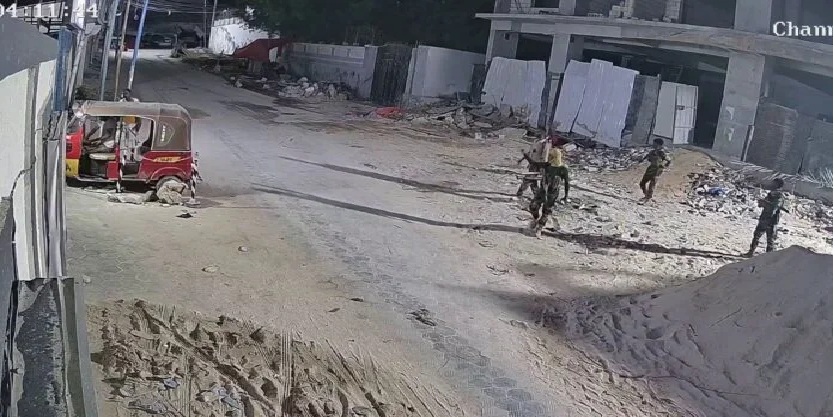
The UAE delegation brought to us the biggest projects ever lend a hand to Somali-land. It is regrettable and unfortunate to terrorism a friendly delegation that traveled thousands of miles from their country just to assist their needy poor brothers in Somali-land. Instead of extending warm hospitality, we have welcomed them by gun point. In conclusion, certainly this terrorism act done by representatives of the foreign minister will be convey to donor country (UAE) and possibly will eliminate further UAE assistance to Somali-land. Last, but the least, the government should investigate and brought to justices those behind these horrific and barbaric acts. The latest corruption committed by the minster is of new type, as it is corruption that involves acts of terrorism.
Ismail lugweyne.